What is Temporary Email: The Truth About Disposable Inboxes
A temporary email address lets you receive messages without sharing your primary inbox address. It can be useful for one-time registrations, email verification, and reducing unwanted promotional messages. In this guide, you will learn how disposable inboxes work, when to use them, and what privacy and security limitations to consider.
I have used temp mail services for testing, sign-up processes, downloading resources, and checking how websites handle email verification. In those cases, a disposable inbox saved time and kept my primary email clean and spam-free.
What Is a Temporary Email Address, and Why Do People Use Temp Mail?
A temporary email account is an inbox you can use only for a little while. These addresses may expire automatically after a certain amount of time, like ten minutes or a few hours. People use temporary email to protect their privacy and avoid sharing their primary email address with unfamiliar websites.
Temporary mail is simple to use. You visit a temporary email website, and it instantly creates a new email address for you. You can copy and use this address to sign up for websites, download files, or access to content without giving out your personal information. It's a quick and easy approach to keep your main email clean.
Temporary Email vs. Regular Email: Differences
A primary email address is an important part of your online identity. You use it to talk to people in both your personal and business lives. A temporary email address, on the other hand, is specially designed for short-term use. You make it quickly and then forget about it. This makes it useful for one-time registrations and short-term activities.
A key benefit of disposable email is that it helps you avoid sharing your primary email address. It keeps your primary email inbox clean. But there are some problems. When a temporary inbox expires, you may lose access to incoming messages, depending on the provider's policies. A regular email account is better suited for long-term communication and account recovery than a temporary email.
Behind the Scenes: How Disposable Email Addresses Work
What does a disposable email do? They are made and managed by temporary email providers. They use one or more domains. When you request a throwaway email address, their system makes a new one on one of these domains. This address is generally created within a few seconds.
The service makes a simple web page for your temporary inbox. This box shows all the emails that have been sent to your temporary email address. You can read them, click on the links, and then close the site. Depending on the provider's retention policy, the inbox or its messages may become unavailable after a set period.
Why Should You Use a Temporary Email?
There are several benefits of disposable email instead of your primary email. If you visit a website you don't trust, a throwaway email is a great idea. You might like to get a free e-book. Or maybe you are entering a contest. A throwaway email address helps keep promotional messages out of your primary inbox.
It also makes sense when you want to try out a service. If you're a developer, you may need more than one account to test your app's sign-up process. Using a throwaway email service lets you quickly create new accounts. This keeps your primary inbox clean and saves time.
Signing up for free trials is a common use. You can use temporary email to register for free trials when the service accepts disposable email addresses. You can also use a temporary email address to sign up for Wi-Fi hotspots that require one.
Another common use is online shopping. A throwaway email is great for getting a one-time discount code from a new store. It lets you get the bargain without adding another newsletter to your primary inbox. These addresses also work well for getting reports or white papers.
Why You Should Not Use a Temporary Email?
Do not use a disposable email address to sign up for banking apps or accounts that you plan to use long-term, or for banking, financial or confidential messages. This is because temporary emails are designed for short-term use. A temporary email address may expire after a fixed period. You can’t receive password reset or new device verification emails in the future if the provider does not allow email recovery. That’s why it’s better to use your primary email address for important accounts.
Temporary Email vs. Disposable Email vs. Burner Email
A temporary email account is often called a burner email address. It works like a burner phone. You generally use it once or twice. A burner email can help keep your personal email address private. You don't have to give any personal information to make one.
A burner email helps you avoid sharing your personal email address, but it does not guarantee complete anonymity. Websites may still collect information such as your IP address or browser data.
People sometimes use the terms "temporary mail" and "disposable email" to mean the same thing. Both of them talk about email addresses that are only good for a short time. The main job is still the same: to give you an inbox you may use and then throw away without any strings attached. Both keep spam out of your inbox.
But other services might have features that are a little different. One provider might keep emails for 10 minutes, while another keeps them for one or two hours or longer. Some of them let you send emails, while others only let you receive them. In the end, the main purpose of disposable emails and temporary mail is to keep your information private.
How to Create an Instant Temporary Email Address
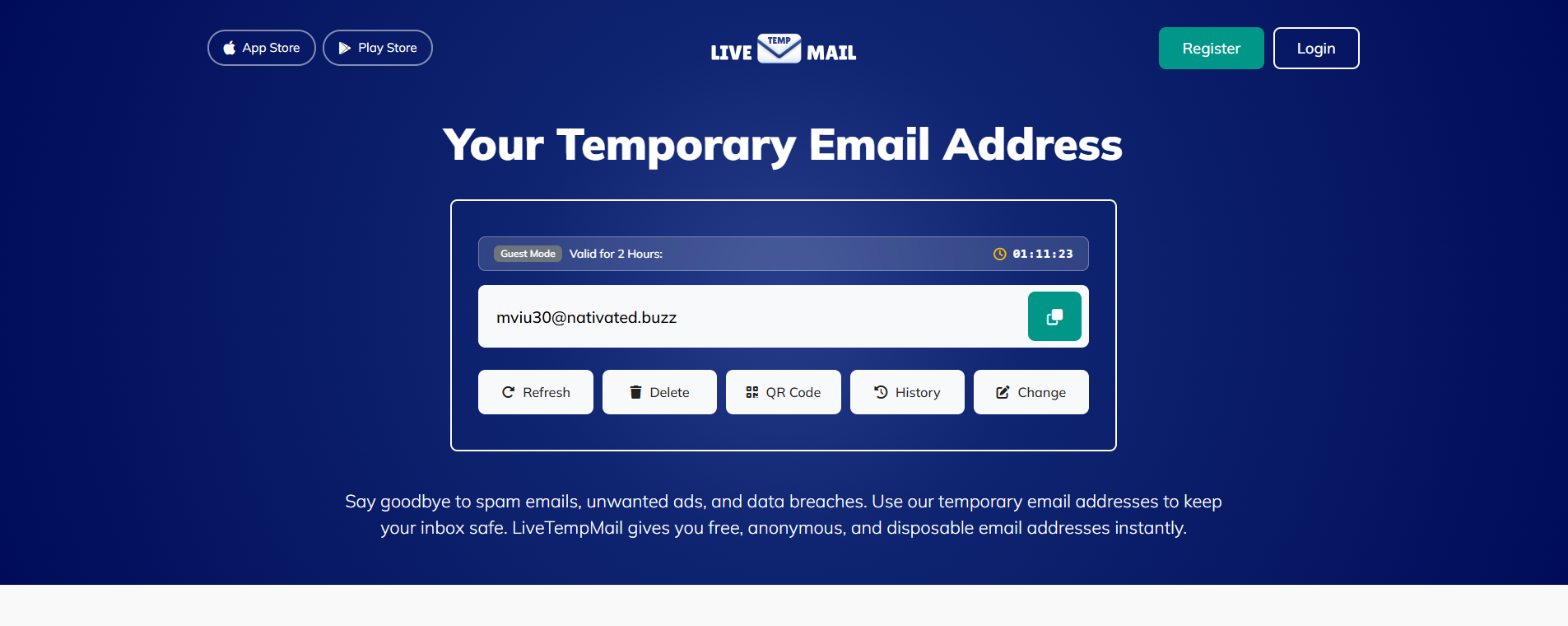
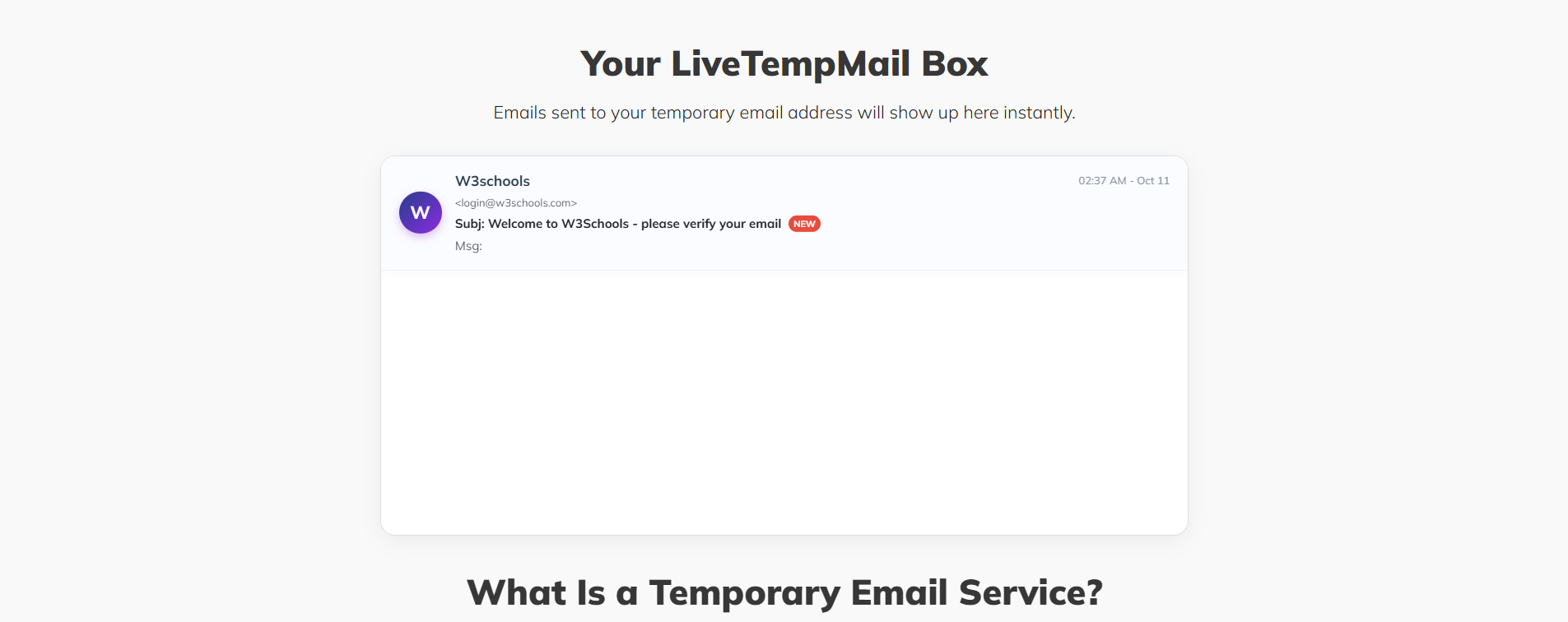
When you visit LiveTempMail, a new instant temporary email address is generated automatically and is ready to use. You copy the email address and use it with any suitable website or app. The website or app sends a verification code or a URL. You receive the email in the inbox of your LiveTempMail dashboard.
The expiry time is displayed above your temporary email address, this helps you to keep in mind how long the inbox will remain available.
Are Disposable Emails Safe? Privacy, Security, and Limits
Never use temp mail for banking accounts, password recovery, legal communication, or personal data. Once the inbox expires, recovery may be possible, but only according to provider policy.
Temporary email can help protect your primary email address, but the privacy and security of the inbox depend on the provider's access controls and data-handling practices; avoid using a temporary email for private information.
Some services offer inboxes publicly accessible, so these providers do not guarantee end-to-end encryption. Avoid receiving sensitive information to your temp mail address unless you have verified the provider's policies.
You will lose access to the address forever after it expires if the provider does not offer recovery. Always use a permanent, safe email address for critical accounts.
How to Pick the Best Temporary Email Service?
The best temporary email solution for you depends on what you need. Find a provider with clear privacy practices and data retention policies. Find out how long the emails are kept. Some services let you set an expiration time. For some projects, this flexibility can be highly useful.
Think about the user interface as well. Choose a service with an easy-to-use inbox and reliable message delivery. It should immediately create an address and make incoming messages easy to read. Some services offer additional features such as using your own domain name. Compare retention periods, inbox access, and available features before choosing a provider.
FAQs
Can temporary email receive verification codes?
Yes. Temporary email addresses can receive verification codes and confirmation links. However, some websites block temporary email addresses.
Can an expired address be recovered?
It depends on the tempmail provider. Some temporary email services let users recover or recreate an expired address, while others permanently delete it. Recreating an address does not necessarily restore previously deleted messages.
Can someone read my disposable inbox?
It’s possible because some temp mail providers use publicly accessible inboxes, while others offer private inboxes. Check the provider's privacy and security features before receiving any sensitive information.
Conclusion
A temporary email is useful for short-term registrations, testing, and receiving one-time messages, trying something out for free, or other short-term purposes. Using disposable email addresses can help to reduce spam and limit how often you share your primary email address online, to protect you from spam emails. However, disposable inboxes are not a replacement for permanent email accounts. Just keep in mind the limits. Their limited lifespan and varying privacy protections make them unsuitable for sensitive communication or important account recovery. Do not use a temporary inbox for accounts that are crucial or private. For everything else, a throwaway email service makes it easier to get around the digital world with less clutter and more privacy. Choose a reliable provider and use temporary email responsibly.