How To Stay Protected On The Internet and Why It Is Important
Why is online privacy important?
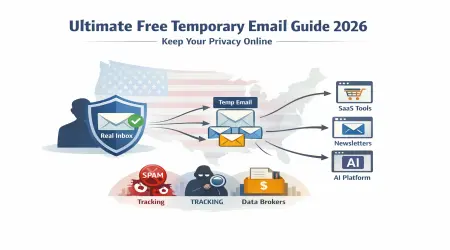
Everything we do on the internet leaves a ‘digital footprint’. Many websites collect our data, sometimes with our permission, but often without our permission. This data can be linked back to you in various ways. The most common result is the advertisements repeatedly shown to you based on the tracking of your online activities.
However, the issue goes beyond just advertisements. Sometimes, this data can affect your eligibility for employment or loans. Even government agencies collect data for various purposes. Therefore, you should not take your online privacy lightly, especially if you wish to keep your personal details secure.
How can you protect your identity?
You can take a few simple steps to improve your online privacy. The most common method is using a VPN (Virtual Private Network).
Using a VPN
A VPN routes your internet traffic through a secure server; this prevents websites from seeing your actual IP address and makes it difficult to determine your current location. It also encrypts your internet connection (converting data into a secure code), which is highly effective in protecting your data from hackers when using public Wi-Fi.
If you are looking for a VPN for basic use, free services like HAXVPN are available.
Using a VPN acts as an additional layer of protection for your online freedom and security. Its benefits include:
- Your online activities remain more private; your actual IP address is hidden.
- Data is transmitted securely over public Wi-Fi.
However, keep one thing in mind: a VPN does not make you 100% anonymous. If you are logged into a website or have cookies stored in your browser, websites can still identify you.
Search engines that do not track data
Most of us use Google for daily searches, but major search engines like it store your search history and IP address for various purposes.
Using a VPN alone does not completely eliminate tracking. For example, if you search for something while logged into your Gmail account, your search activity will be directly linked to that account. If privacy is truly important to you, try using search engines like DuckDuckGo, which do not store user data. Furthermore, be sure to check your browser settings (cookies, location permissions, and trackers). Understanding these elements will help you decide how much access to grant a specific website.
Keep your inbox safe from spam (unwanted emails)
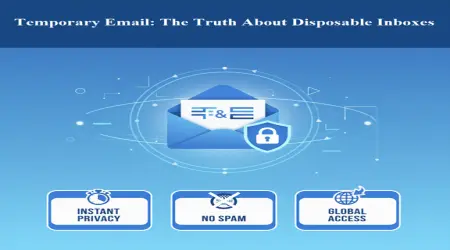
Email privacy is also crucial. If you keep entering your personal email address on every random website, newsletter, or service, your inbox will soon be flooded with spam. Creating a new account for every minor interaction is also not practical. This is where 'temporary emails' come in handy.
What is a temporary email?
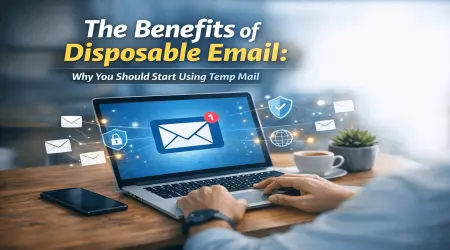
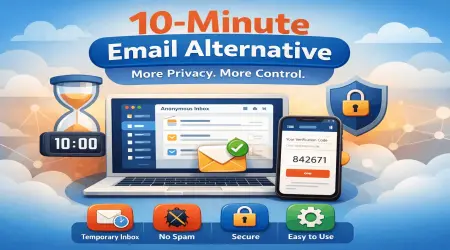
A temporary or disposable (single-use) email is an address you can use for a short period. It is ideal for websites where you only need an email to sign up or receive an OTP/verification code. You can use services like 'Temp Mail,' which offer the following features:
- A very simple and user-friendly interface.
- A ready-to-use inbox becomes available as soon as you open the website.
- Incoming emails appear on the screen instantly.
- You can create a new address whenever you wish.
- Your actual, personal email address remains completely secure.
However, before using any temporary email service, be sure to check their data or address deletion policy; some services delete data automatically, while others require you to delete it manually.
Although disappearing completely from the internet is difficult, enhancing your privacy is within your control. Use a VPN, choose secure search engines, configure your browser settings correctly, and use temporary email addresses whenever possible. Most importantly, exercise caution when sharing your data (such as your phone number or actual email address) online. These small habits can play a significant role in making your online life much more secure.